Managing money has never been easier. Thanks to modern technology, we no longer need spreadsheets, notebooks, or complicated software to keep track of our finances.Moreover, there are free tools that help us budget, save, invest, and make smarter financial decisions from our phones or laptops.
The best part? Many of these tools are completely free to use and can save us both time and money.
If you’re interested in AI-powered finance apps, check out The Best AI finance Tools in 2026.
In this guide, we’ll look at some of the best free financial tools worth trying in 2026.
Why Financial Tools Matter More Than Ever
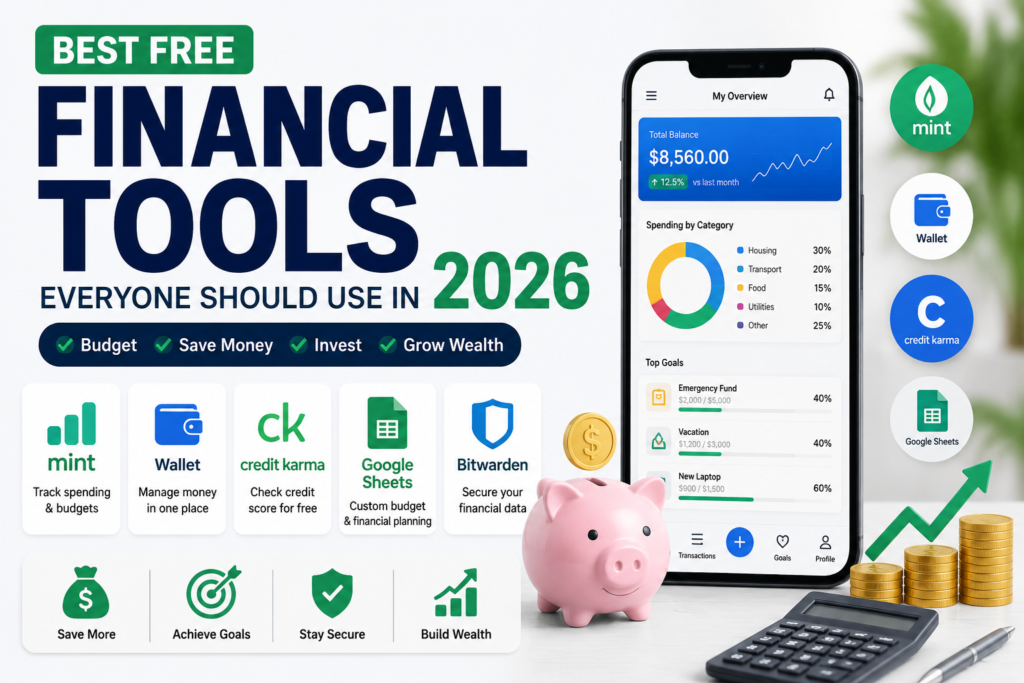
The way we manage money is changing quickly. Digital banking, online payments, investing apps, and AI-powered assistants are becoming part of everyday life.
Without the right tools, it’s easy to lose track of spending, miss savings opportunities, or make financial decisions based on guesswork. Good financial tools give us better visibility into our money and help us stay organized.
1. Budget Tracking Apps
A budget tracking app is one of the simplest tools we can use to improve our finances.
For example, these apps automatically categorize expenses, track spending habits, and show where our money is going each month.
Benefits include:
- Better control over spending
- Easier financial planning
- Faster identification of unnecessary expenses
- Improved savings habits
Many free budgeting apps now offer detailed charts and spending insights that were once only available in paid software.
2. Expense Management Tools
Small purchases often add up faster than we realize.
In addition, expense management tools help us monitor daily transactions and understand spending patterns. Whether it’s coffee, subscriptions, dining out, or online shopping, these tools make it easier to see the bigger picture.
By reviewing expenses regularly, we can make adjustments before bad habits become expensive.
3. Investment Tracking Platforms
Investing has become more accessible than ever. However, keeping track of multiple investments can be challenging.
Investment tracking platforms allow us to monitor:
- Stocks
- ETFs
- Mutual funds
- Retirement accounts
- Cryptocurrency holdings
Instead of checking multiple websites, we can view our portfolio performance in one place and make more informed decisions.
4. Financial Calculators
Furthermore, financial calculators remain one of the most underrated free tools available online.
They can help us estimate:
- Loan payments
- Mortgage costs
- Savings growth
- Compound interest
- Retirement goals
Even simple calculations can provide valuable insights when planning for long-term financial success.
5. Credit Monitoring Tools
A strong credit profile can affect many aspects of our financial lives.
Free credit monitoring tools help us:
- Track credit score changes
- Detect unusual activity
- Monitor account updates
- Stay informed about potential risks
As a result, regular monitoring can help identify issues early and support better financial health over time.
6. AI-Powered Financial Assistants
Artificial intelligence is becoming a useful part of personal finance.
Modern AI tools can analyze spending habits, provide budgeting suggestions, answer financial questions, and even help identify opportunities to save money.
While AI should not replace professional financial advice, it can be a helpful assistant for everyday money management.
7. Savings Goal Trackers
Saving money becomes easier when we have a clear target.
Savings goal trackers help us stay motivated by showing progress toward goals such as:
- Emergency funds
- Travel plans
- Home purchases
- Education expenses
- Major life milestones
Seeing progress visually often makes it easier to stay consistent with saving habits.
How to Choose the Right Financial Tool
Not every tool is right for everyone.
Before choosing a financial tool, it helps to ask:
- Does it solve a specific problem?
- Is it easy to use?
- Does it provide useful insights?
- Is the free version sufficient?
- Does it protect user data and privacy?
The best tool is often the one we will actually use consistently.
The Future of Personal Finance Technology
Financial technology continues to evolve rapidly.
We are seeing more automation, smarter AI assistants, faster digital payments, and better financial analytics than ever before. Over the next few years, financial tools will likely become even more personalized and easier to use.
For everyday users, this means greater control over money and better opportunities to make informed financial decisions.
For more financial education and investing basics, visit Investopedia.
Final Thoughts
Finally, free financial tools can make a significant difference in how we manage money. From budgeting and expense tracking to investing and savings goals, the right tools help us stay organized and make smarter financial choices.
Technology cannot guarantee financial success, but it can make the journey much easier. By taking advantage of the free resources available today, we can build stronger financial habits and create a more secure financial future.