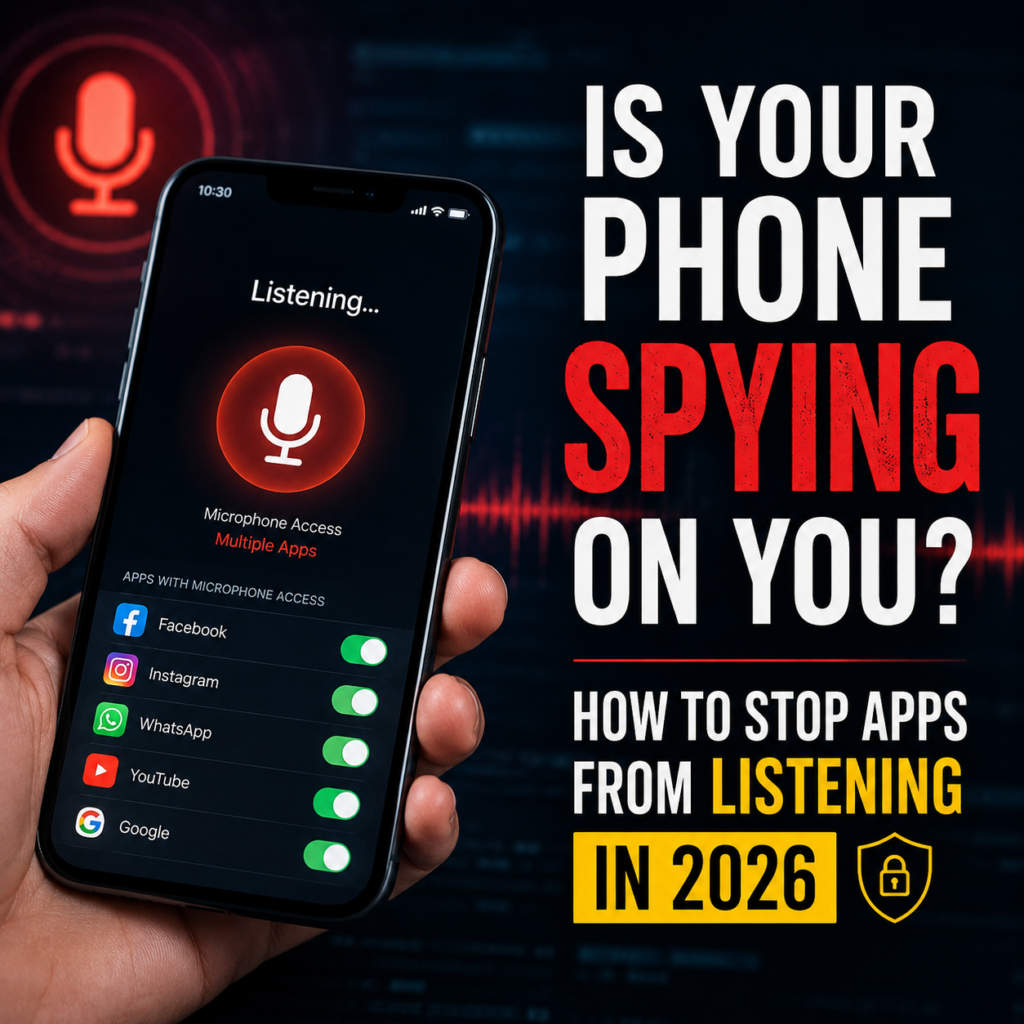
Have you ever talked about buying shoes, then suddenly seen shoe ads on Instagram? You are not alone. Millions of people in the UK, USA, Australia, and Canada ask the same question every day: Is my phone spying on me?
The short answer is yes — but not in the way you think. Your phone is not a secret agent hiding in your pocket. Instead, apps listen to your microphone,track where you go, and watch what you search — all to show you ads you might click . This is just how apps make money — they sell your habits to advertisers, and it happens more than you know.
Why This Topic Matters Right Now
In 2026, more people than ever are worried about privacy. Google and Apple have added new privacy labels, but most people do not know how to use them. Researchers say 73% of smartphone users in English-speaking countries feel their data is not safe. Yet only 12% have checked their app permissions in the last year.
This is why you need to know what is really going on.
How Phone Spying Apps Listen to You
First, let us kiill the big myth. Your phone is not recording every word and sending it to some secret server. That would kill your battery and data in 2 hours. Instead, apps are smarter than that — sneakier.
Phone Spying Apps and Trigger Phrases
Some apps activate your microphone for short bursts. They listen for “trigger words” like brand names or product types. You already said yes to this — and most people click “Allow” without reading.
Phone Spying Apps and Cross-App Data Sharing
Here is the real trick. App A hears you talk about holidays. It shares this interest with App B through advertising networks. App B then shows you flight ads. You think App B was listening, but it just bought the data.
Location and Timing Clues
Your phone knows you went to a car dealership. Ad networks know this too. Later, you see car loan ads. It feels like spying, but it is just location history matching with ad targeting.
Which Apps Ask for Microphone Access the Most
Not all apps need your microphone. Here are the ones that ask for it most often:
- Social media apps (Facebook, Instagram, TikTok) — for video recording
- Voice assistants (Siri, Google Assistant, Alexa) — always listening for wake words
- Gaming apps — for voice chat features
- Keyboard apps — for voice-to-text typing
- Shopping apps — rarely need it, but some still ask
Simple Steps to Stop the Spying
You do not need to throw your phone away. These steps take less than five minutes:
Check Your Microphone Permissions
Go to your phone settings. Find “Privacy” or “Permissions.” Look at which apps can use your microphone. If a flashlight app has microphone access, that is a red flag. Turn it off.
Review App Privacy Labels
Both Apple and Google now show privacy labels before you download. Read them. If an app says “Data used to track you across other apps,” think twice before installing.
Disable Personalized Ads
In your phone settings, turn off “Personalized Ads” or “Ad Tracking.” This stops apps from building a profile based on your behavior. You will still see ads, but they will be random, not based on your conversations.
Use a Privacy-Focused Browser
Apps like Chrome track everything. Try Brave, Firefox Focus, or DuckDuckGo. These browsers block trackers by default.
Delete Apps You Do Not Use
Old apps still collect data. If you have not opened an app in three months, delete it. Less clutter, less tracking.
What the Law Says in 2026
Governments are finally catching up. In the UK, the Data Protection Act requires apps to explain clearly what they collect. The USA has state-level laws like the California Consumer Privacy Act (CCPA). Australia and Canada have similar rules under their privacy commissioners.
But here is the truth: laws move slowly. Technology moves fast. Your best protection is your own awareness.
The Future of Phone Privacy
Experts predict two big changes coming soon:
- On-device processing: More apps will process data on your phone instead of sending it to servers. This keeps your data local and safer.
- AI privacy assistants: New tools will automatically block suspicious permissions and warn you in real time.
Until then, stay sharp. Check your settings once a month. It takes two minutes and saves you from feeling watched.
Final Thoughts
Your phone is a powerful tool, but it is also a data collector. The companies behind apps want to know everything about you because your attention is worth money. They are not evil, but they are not your friends either.
The good news? You have control. Five minutes of checking settings today can save you months of worry tomorrow.
Have you noticed your phone showing ads after conversations? Share your experience in the comments below.