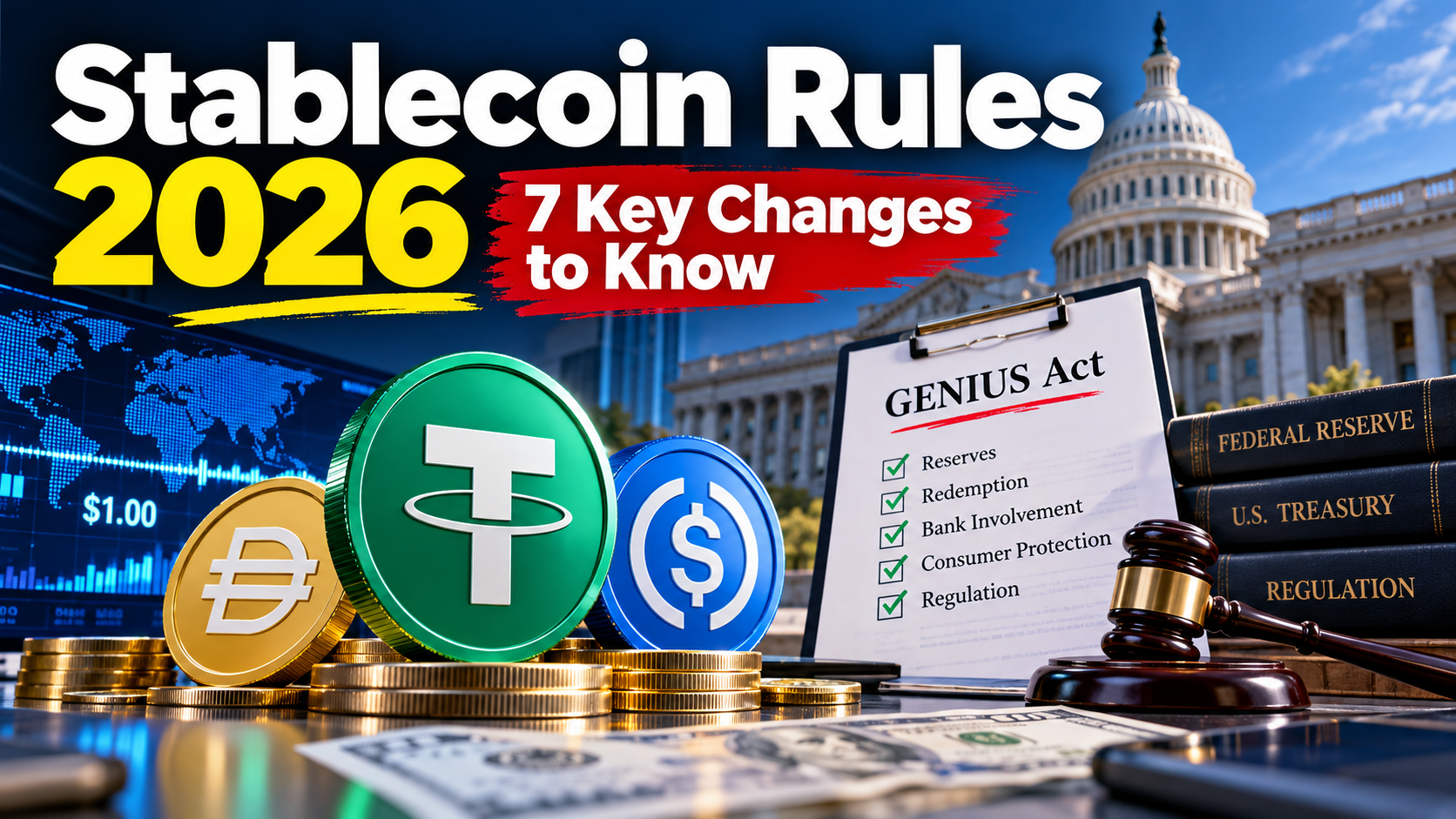
Stablecoin Rules 2026: 7 Key Changes to Know
Stablecoins are supposed to make digital money feel simple: one token, roughly one dollar.
But there is a much bigger question behind that promise:
What actually makes that $1 token worth $1 when people want their money back?
That question is becoming increasingly important as stablecoin rules 2026 take shape in the United States.
On September 24, 2026, the Federal Reserve proposed two sets of regulations for Board-supervised payment stablecoin issuers under the GENIUS Act. The proposals cover reserve assets, capital, risk management, safekeeping, and a process for certain supervised banks seeking approval to issue payment stablecoins.
These proposals are not final rules yet. They are part of a broader regulatory framework that U.S. agencies are still building.
If you use stablecoins—or are simply wondering whether they are becoming safer—here are seven changes worth understanding.
1. Stablecoin Rules 2026 Put Reserve Backing in the Spotlight
A stablecoin’s promise is easy to understand.
If you hold a dollar-linked payment stablecoin worth $100, you expect it to remain close to $100 and ultimately be redeemable as promised.
That makes the assets behind the token extremely important.
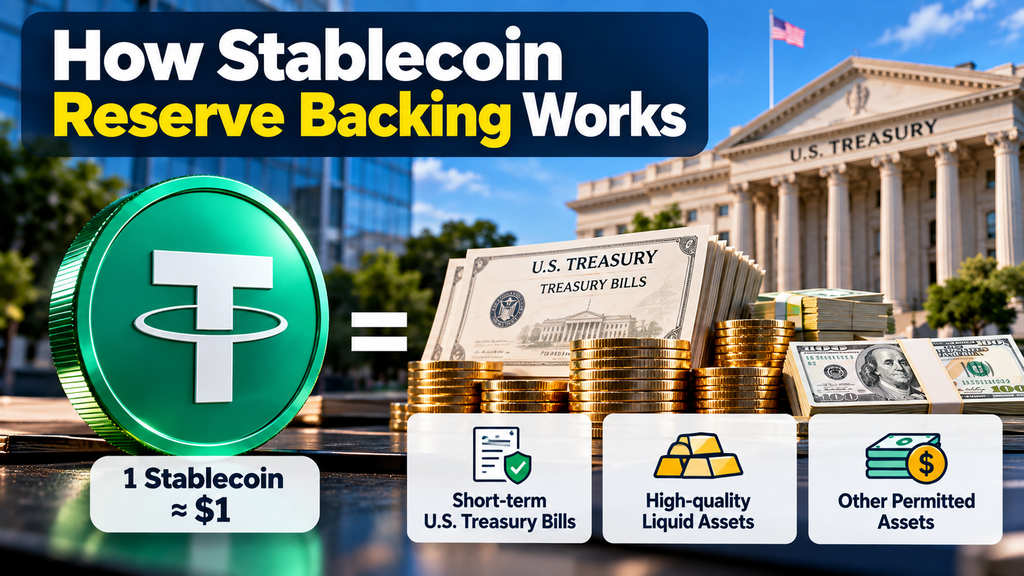
Under the Federal Reserve’s September proposal, Board-supervised payment stablecoin issuers would have to fully back their stablecoins with permissible reserve assets.
Those reserves could include short-term U.S. Treasury bills and certain other high-quality, liquid assets.
Why does this matter?
Imagine a company issues $1 billion worth of payment stablecoins. Users need confidence that there are appropriate assets supporting those obligations.
Without reliable backing, the word “stable” alone offers little protection.
For consumers, reserve quality is therefore one of the first things worth understanding before trusting a stablecoin with significant money.
2. Getting Your Money Back Is Just as Important
The stablecoin rules 2026 discussion isn’t only about what companies hold in reserve.
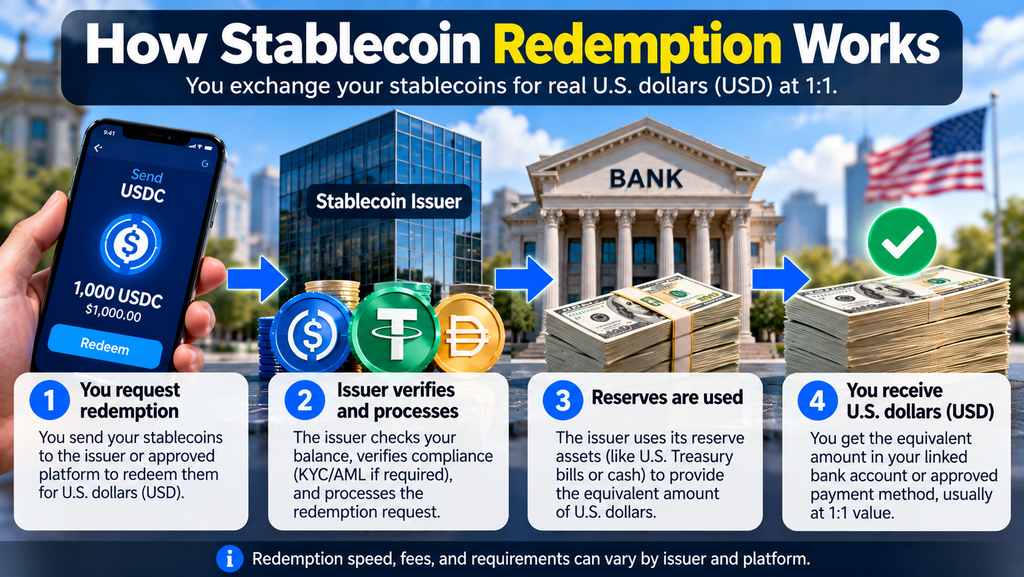
It is also about redemption.
A stablecoin might trade near $1 during normal conditions, but the bigger test can come when many users want their money back at the same time.
Federal Reserve Governor Michael Barr said payment stablecoins need to be reliably and promptly redeemable at par across different conditions, including periods of market stress. He also said further work would be needed as the framework develops.
The Federal Reserve’s September 2026 proposal would require Board-supervised payment stablecoin issuers to fully back their stablecoins with permitted reserve assets, including short-term Treasury bills and certain high-quality liquid assets.
That gives consumers a useful way to evaluate stablecoins.
Don’t ask only:
“Is this token worth $1 today?”
Also ask:
“How do I actually redeem it, and who is responsible for giving me my money back?”
Those are very different questions.
3. Stablecoin Rules 2026 Go Beyond Holding Reserves
Having reserves does not automatically make an issuer safe.
A financial company still has systems, employees, technology, counterparties and operational risks.
That is why the Federal Reserve proposal goes further.
It would establish standardized capital requirements addressing certain credit and operational risks and would introduce broader risk-management standards for Board-supervised payment stablecoin issuers.
The proposal also addresses firms supervised by the Board that safeguard assets backing payment stablecoins.
This matters because a stablecoin can face problems even if the assets behind it look strong on paper.
For example, poor operational controls or failures in how assets are safeguarded can create a different type of risk.
So when evaluating a stablecoin, consumers should think beyond:
“What backs it?”
They should also consider:
“Who manages those assets, and under what rules?”
4. Banks Would Need a Process Before Issuing Stablecoins
One interesting part of the stablecoin rules 2026 concerns traditional banks.
The Federal Reserve’s second September proposal would establish procedures for Board-supervised insured depository institutions seeking approval for a subsidiary to issue payment stablecoins.
Applicants would have to submit information including a business plan and financial information.
The proposal also provides procedures covering applications, appeals, hearings and final decisions.
In simple terms, a supervised bank would not simply wake up one morning and launch a stablecoin without going through the relevant approval process.
This could become increasingly important if stablecoins move beyond crypto trading and become more deeply connected with everyday payments.
Stablecoins are only one part of the transformation happening in digital banking. You can also explore how the Visa AI Financial Assistant could change the way consumers interact with their financial accounts.
5. The GENIUS Act Framework Is Bigger Than One Fed Proposal
This is where the story can get confusing.
The stablecoin rules 2026 are not one single regulation coming from one agency.
The Federal Reserve’s September proposals are part of a larger implementation process under the GENIUS Act.
The U.S. Treasury is working on other pieces.
On August 17, 2026, Treasury issued a proposed rule addressing the issuance, offering and sale of payment stablecoins in the United States.
Treasury says that beginning on the expected GENIUS Act effective date of January 18, 2027, a person generally may not issue a payment stablecoin in the United States without an appropriate federal or state license.
Treasury’s proposal also addresses when foreign-issued payment stablecoins may be offered or made available in the U.S.
Other rulemaking has tackled customer identification. A joint proposal involving FinCEN and federal banking regulators would require permitted payment stablecoin issuers to maintain effective customer identification programs under the Bank Secrecy Act framework.
So when you see the phrase “stablecoin regulation,” remember:
There are several pieces moving at the same time.

6. Stablecoin Rules 2026 Do Not Make Crypto Risk-Free
This may be the most important consumer takeaway.
Regulated does not mean risk-free.
The stablecoin rules 2026 could strengthen standards around reserve assets, capital, risk management and licensing.
But consumers can still face other risks.
You may still need to think about:
- who issued the stablecoin;
- how redemption works;
- where your tokens are stored;
- whether an exchange or wallet is secure;
- whether the issuer is actually covered by the relevant regulatory framework;
- and what protections apply if a service provider fails.
There is also a timing issue.
Digital payments are also becoming more automated, creating new security and authorization risks. Read our guide to AI Agent Payments: 7 Serious Risks You Need to Know for a closer look at how automated payments can affect consumers.
The Federal Reserve’s September 24 measures are proposals seeking public comment. They should not be described as though every requirement has already become a final, enforceable rule.
That distinction matters.
A headline saying “Stablecoins are now fully regulated and safe” would oversimplify what is actually happening.
7. Stablecoin Rules 2026 Are Still Developing
So what should an ordinary stablecoin user do right now?
You probably don’t need to read hundreds of pages of regulatory documents.
Instead, pay attention to practical questions.
Before putting significant money into a stablecoin, find out who issued it, what supports its value, how redemption works and what protections actually apply.
And keep watching the rules.
The Federal Reserve says the comment period for its September proposals will close 60 days after publication in the Federal Register. That means the proposals can still evolve before final regulations are adopted.
Treasury is also continuing its implementation work ahead of the GENIUS Act’s expected January 18, 2027 effective date.
In other words, stablecoin rules 2026 are a developing story, not a finished one.

What Stablecoin Rules 2026 Mean for Consumers
The biggest takeaway isn’t that stablecoins have suddenly become the same as cash sitting in a traditional bank account.
They haven’t.
Instead, the United States is building a clearer regulatory structure around payment stablecoins.
The current proposals address questions that matter to consumers: What backs the token? How are reserves managed? What happens when someone wants to redeem? Who can issue these products? What standards must issuers follow?
Those are meaningful questions.
But regulation should not replace basic caution.
Before using a payment stablecoin, understand the issuer, reserves, redemption process and services you depend on to hold or transfer it.
A token may have the word “stable” in its name.
That doesn’t mean you should stop asking what keeps it stable.
Frequently Asked Questions
What are the stablecoin rules 2026?
The stablecoin rules 2026 include several U.S. regulatory proposals implementing the GENIUS Act. Recent Federal Reserve proposals address reserve backing, capital and risk-management standards, safekeeping and procedures for certain supervised banks seeking to issue payment stablecoins. Treasury and other regulators are implementing additional parts of the framework.
Are the new Federal Reserve stablecoin rules final?
No. The measures announced by the Federal Reserve on September 24, 2026 are proposed regulations, and the Board is requesting public comments.
Will payment stablecoins have to be fully backed?
Under the Federal Reserve proposal, Board-supervised payment stablecoin issuers would have to fully back their stablecoins using permissible reserve assets, including short-term Treasury bills and certain other high-quality liquid assets.
When does the GENIUS Act take effect?
Treasury identifies January 18, 2027 as the expected effective date. Treasury also describes additional restrictions that would apply beginning July 18, 2028.
Does stablecoin regulation mean stablecoins are completely safe?
No. Regulation can address particular risks and establish requirements for covered issuers, but it does not eliminate every issuer, operational, cybersecurity, wallet, exchange or market risk.