Introduction
Managing money has never been easy. Between paying bills, tracking subscriptions, saving for future goals, and making investment decisions, it’s easy to feel overwhelmed. Many people download budgeting apps with good intentions, only to stop using them after a few weeks because they require constant manual updates.
That is beginning to change.
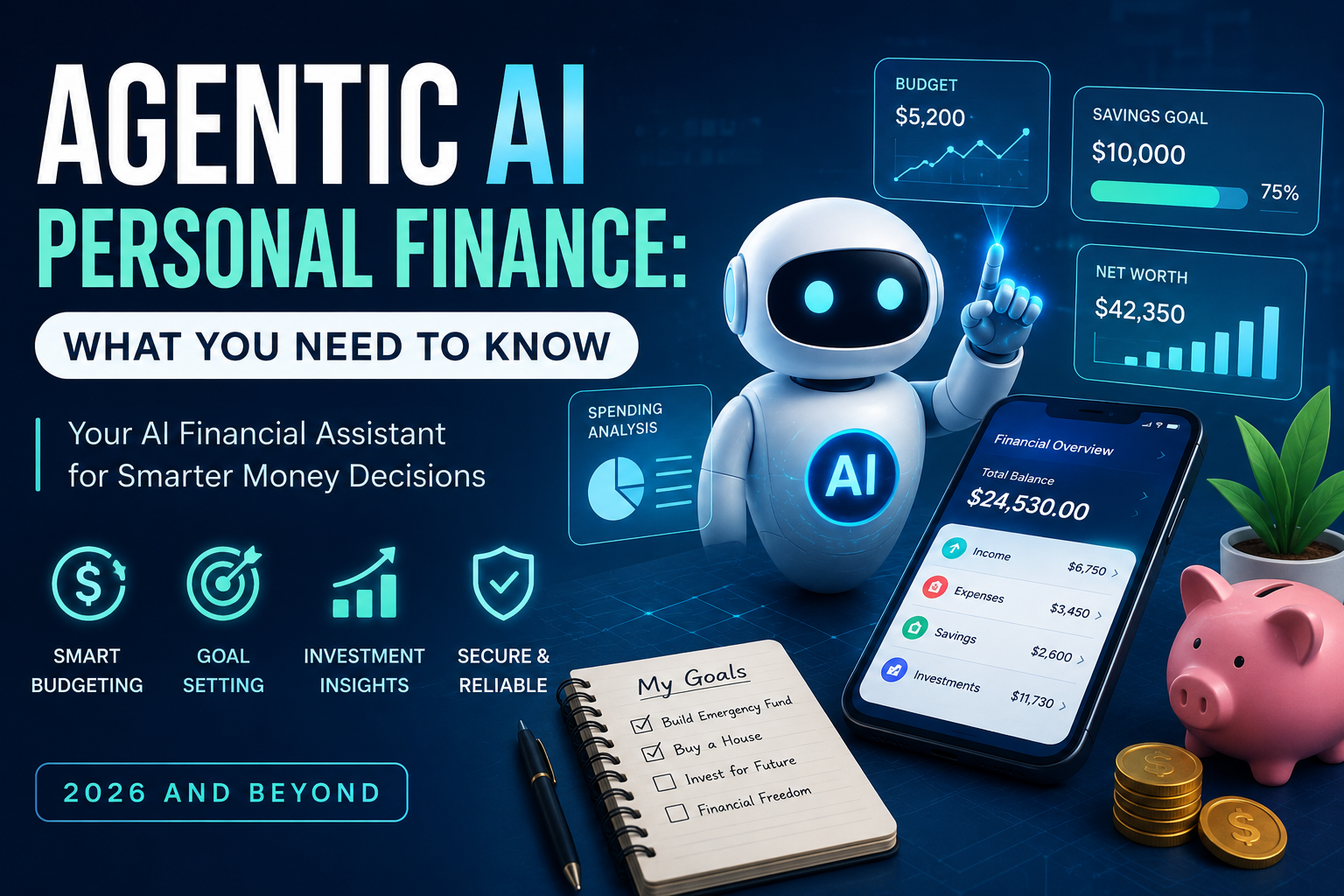
A new generation of artificial intelligence, known as Agentic AI, is moving beyond simple chatbots and financial calculators. Instead of only answering questions, it can understand your financial goals, analyze your spending habits, suggest practical improvements, and even complete certain tasks with your approval.
If you’re looking for an agentic AI personal finance guide, this article explains everything you need to know in simple language. You’ll learn what Agentic AI is, how it works, where it can help, what risks to watch for, and why many experts believe it will shape the future of personal finance.
Whether you’re a student trying to build better money habits, a busy professional managing monthly expenses, or someone planning long-term financial goals, understanding this technology today could help you make smarter financial decisions tomorrow.
Before exploring Agentic AI, you may also want to discover the Best AI Finance Apps for Smarter Money in 2026 to see how today’s leading AI platforms are already helping people manage their finances
What Is Agentic AI in Personal Finance?
Artificial intelligence has already changed how we search for information, write emails, and create content. Personal finance is now entering the next stage.
Traditional AI works like an assistant that waits for instructions. You ask a question, and it provides an answer.
Agentic AI works differently.
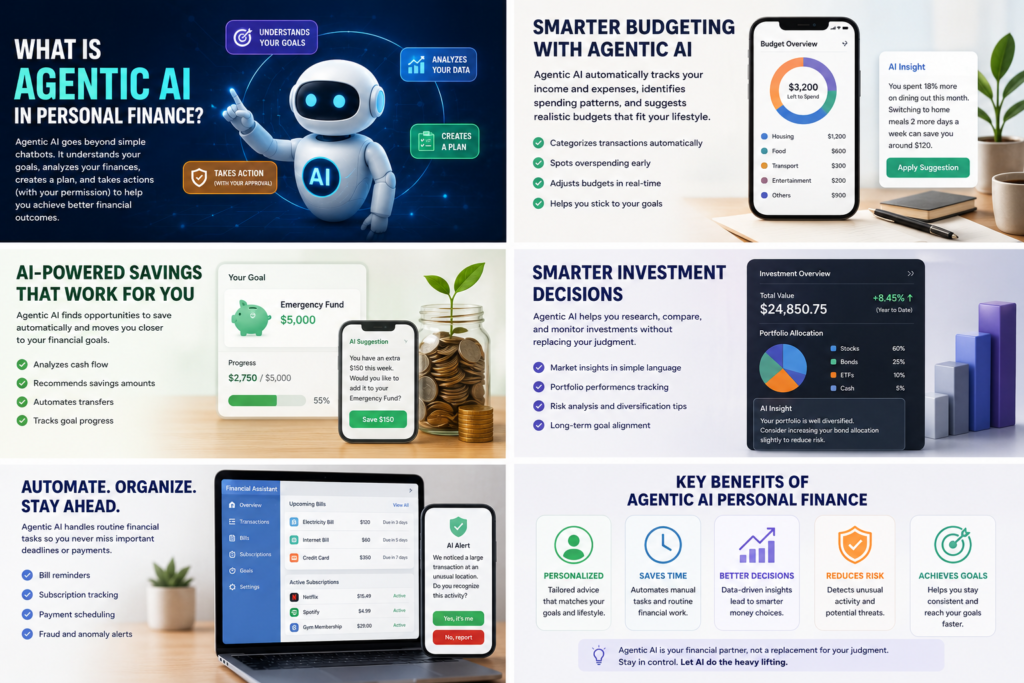
Instead of simply responding, it can understand a goal, create a plan, monitor progress, and recommend the next action. In some cases, it can even complete approved tasks automatically.
Imagine telling your AI:
“Help me save $5,000 for a house deposit by next summer.”
Instead of giving general saving advice, an Agentic AI system could:
- Analyze your income and monthly expenses
- Identify unnecessary spending
- Suggest a realistic savings target
- Adjust your monthly budget automatically
- Remind you before overspending
- Track your progress every week
This is why many experts describe Agentic AI as the next generation of digital financial assistants rather than another chatbot.
For a broader understanding of how advanced AI systems are evolving, readers can explore the latest research from https://www.ibm.com/think/topics/agentic-ai.
How Agentic AI Is Different From Traditional AI
At first glance, both technologies may seem similar because they use artificial intelligence. The difference becomes clear once you start using them.
| Traditional AI | Agentic AI |
|---|---|
| Answers questions | Solves financial goals |
| Waits for commands | Plans multiple steps ahead |
| Gives information | Takes approved actions |
| Reacts to requests | Works proactively |
| Limited context | Learns from your financial habits |
For example, a traditional chatbot might tell you how to reduce spending.
An Agentic AI assistant could notice that your food delivery expenses increased by 40% this month, suggest a lower weekly budget, remind you before placing another order, and show how that decision affects your yearly savings.
That shift—from simply informing to actively assisting—is what makes Agentic AI so exciting.
Why Is Everyone Talking About Agentic AI?
The biggest reason is simple.
People don’t want more financial information.
They want better financial decisions.
Most people already know they should save more money, avoid unnecessary spending, and invest for the future.
The difficult part is turning those intentions into consistent habits.
Agentic AI bridges that gap.
Instead of expecting you to track every expense manually, it helps organize your finances behind the scenes while keeping you in control of important decisions.
Banks, fintech companies, budgeting apps, and investment platforms are already exploring ways to integrate Agentic AI into their services because consumers increasingly expect financial tools to be smarter, more personalized, and less time-consuming.
How Agentic AI Works
Although the technology behind Agentic AI is sophisticated, the basic process is surprisingly easy to understand.
Step 1: It Learns Your Financial Goals
Every person has different priorities.
Some want to eliminate debt.
Others want to save for retirement, buy a home, travel more, or build an emergency fund.
Agentic AI begins by understanding those goals instead of treating everyone the same.
Step 2: It Analyzes Your Financial Data
With your permission, the AI reviews information such as:
- Income
- Spending patterns
- Monthly bills
- Savings progress
- Investment accounts
- Financial habits
The goal isn’t simply collecting data—it’s identifying opportunities to improve your financial health.
Step 3: It Creates a Personalized Plan
Instead of generic advice, it builds recommendations that fit your lifestyle.
For example, if you usually spend more during weekends, the AI won’t suggest an unrealistic budget. Instead, it may recommend small adjustments that are easier to maintain over time.
Step 4: It Continues Learning
One of the biggest advantages of Agentic AI is continuous improvement.
As your income, spending, and financial goals change, your recommendations evolve as well.
Rather than creating a fixed budget once a year, the system adapts whenever your financial situation changes.
Real-Life Ways Agentic AI Can Help You Manage Money
Understanding the technology is one thing. Seeing how it fits into everyday life is another.
Here are some of the most practical ways Agentic AI is already changing personal finance.
1. Smarter Budgeting
Creating a budget is easy. Sticking to it is much harder.
Traditional budgeting apps usually require you to categorize expenses manually or review reports at the end of the month. Agentic AI takes a different approach.
It can recognize spending patterns automatically, identify areas where you’re consistently overspending, and suggest realistic adjustments based on your lifestyle—not someone else’s.
For example, if your grocery spending increases because of rising food prices rather than unnecessary purchases, the AI may adjust your budget instead of simply warning you that you’ve gone over your limit.
The result is a budget that feels practical rather than restrictive.
If you’re comparing different budgeting solutions, check out our guide to The Best AI Budgeting Apps 2026 That Actually Work to find the right AI-powered app for your financial goals.
2. Automatic Saving Recommendations
Saving money often gets pushed aside after monthly bills are paid.
Agentic AI can monitor your cash flow and identify safe opportunities to save without affecting your daily expenses.
Instead of suggesting a fixed amount every month, it can recommend different amounts depending on your financial situation.
That flexibility makes saving feel more achievable, especially for people with variable income.
3. Better Spending Decisions
Many purchases happen in the moment.
Agentic AI can help you slow down before making unnecessary spending decisions.
Imagine receiving a notification that says:
“Buying this today may reduce your monthly savings goal by 15%.”
It’s not about stopping you from spending.
It’s about helping you understand the long-term impact before you tap the payment button.
4. Investment Support
Investing involves research, patience, and careful planning.
Agentic AI can assist by:
- Summarizing market news
- Comparing investment options
- Monitoring portfolio performance
- Explaining financial terms in plain English
- Highlighting potential risks
However, AI should support your research—not replace your own judgment.
If you’re new to investing, our 7 Powerful AI Investing Tools 2026 Every Investor Needs guide explains how AI can help you research investments while keeping you in control of final decisions.
5. Bill and Subscription Management
Many people forget about subscriptions they no longer use.
Agentic AI can:
- Track recurring payments
- Remind you before bills are due
- Identify duplicate subscriptions
- Suggest services you rarely use
Small improvements like these can save hundreds of dollars over a year.
Benefits of Agentic AI Personal Finance
The growing popularity of Agentic AI isn’t just about convenience.
It offers practical benefits that can make everyday money management easier.
Personalized Financial Guidance
Instead of giving generic advice, Agentic AI adapts recommendations to your income, spending habits, and financial goals.
Saves Valuable Time
Checking accounts, reviewing transactions, and updating budgets manually can take hours every month.
Automation gives you that time back.
Helps Build Better Habits
Many financial mistakes happen because people forget, delay, or lose motivation.
Consistent reminders and progress tracking encourage healthier financial habits over time.
Detects Unusual Activity Faster
AI systems can recognize unusual spending patterns much more quickly than humans.
Early alerts may help users respond faster to suspicious transactions or unexpected account activity.
Reduces Financial Stress
Knowing that an intelligent assistant is monitoring your finances can make managing money feel less overwhelming.
It doesn’t eliminate responsibility—but it can reduce complexity.
Potential Risks You Should Know
Like any technology, Agentic AI isn’t perfect.
Understanding the risks is just as important as understanding the benefits.
Understanding AI risks is just as important as learning about its benefits. The https://www.nist.gov/itl/ai-risk-management-framework offers practical guidance on building and using trustworthy AI systems.
Privacy Matters
Financial information is among the most sensitive personal data you own.
Before connecting any AI tool to your accounts, review its privacy policy, security features, and data-sharing practices.
AI Can Make Mistakes
AI learns from data, but data isn’t always perfect.
Recommendations should always be reviewed before making important financial decisions.
Think of AI as a helpful assistant—not an automatic decision-maker.
Cybersecurity Threats
As AI becomes more popular, scammers are also becoming more sophisticated.
Be cautious of fake AI finance apps, phishing emails, and websites that promise guaranteed investment returns.
If something sounds too good to be true, it usually is.
To protect yourself, read our complete guide to 10 AI Scams That Will Fool Almost Anyone in 2026 (And How to Stay Safe and learn how to spot common fraud tactics before they affect your money.
Human Judgment Still Matters
No AI can fully understand your personal values, family priorities, or future life plans.
Major financial decisions should always involve your own thinking and, when necessary, professional financial advice.
Best Practices for Using Agentic AI Safely
If you’re considering using Agentic AI, keep these simple habits in mind:
- Choose trusted financial platforms with strong security.
- Enable two-factor authentication whenever possible.
- Review AI recommendations before approving actions.
- Avoid sharing unnecessary personal information.
- Keep your apps updated with the latest security patches.
- Monitor your accounts regularly, even when using automation.
These habits help you enjoy the benefits of AI while reducing potential risks.
Consumers should also follow financial safety guidance from the https://www.consumerfinance.gov/ when using digital financial services.
Who Should Use Agentic AI?
One of the biggest strengths of Agentic AI is that it isn’t designed only for financial experts. It can support almost anyone who wants to make smarter money decisions.
Students
Students can use Agentic AI to build healthy financial habits early. From tracking everyday expenses to planning monthly budgets, AI can make money management less overwhelming.
Busy Professionals
If you have a demanding schedule, keeping track of bills, subscriptions, and savings goals can be difficult. Agentic AI helps automate routine tasks so you can spend less time managing money and more time focusing on your work and personal life.
Families
Household finances often involve multiple expenses, from groceries and utilities to school costs and savings goals. AI-powered financial assistants can provide a clearer overview of spending while helping families stay on budget.
Freelancers and Self-Employed Professionals
Irregular income makes budgeting more challenging. Agentic AI can adapt to changing cash flow and recommend realistic saving and spending plans based on current earnings.
Beginner Investors
If you’re new to investing, Agentic AI can simplify research, explain financial concepts in plain language, and help you compare investment options before making decisions.
The Future of Agentic AI Personal Finance
Agentic AI is still in its early stages, but its potential is significant.
Over the next few years, personal finance tools are expected to become more proactive, more personalized, and better connected across financial services.
Instead of switching between multiple apps, future AI assistants may help users manage budgeting, saving, investing, insurance, and payments from a single interface.
As regulations become clearer and security improves, consumers will likely have greater confidence in allowing AI to handle routine financial tasks while keeping final decisions under human control.
The goal isn’t to replace people.
The goal is to help people make better financial decisions with less effort.
Final Thoughts
Managing money has always required discipline, planning, and good habits. While those fundamentals remain the same, the tools we use are changing rapidly.
Agentic AI represents a major step forward because it goes beyond answering financial questions. It can understand goals, monitor progress, identify opportunities, and support smarter financial decisions in ways that traditional budgeting apps cannot.
Still, technology should never replace personal responsibility.
The best results come when people combine AI-powered insights with critical thinking and informed decision-making.
As more banks, fintech companies, and personal finance apps adopt Agentic AI, learning how to use these tools wisely could become one of the most valuable financial skills of the decade.
If you’re exploring AI-powered money management for the first time, start small, choose trusted platforms, and stay involved in every important financial decision. Used responsibly, Agentic AI has the potential to become a valuable partner on your financial journey.
Frequently Asked Questions (FAQ)
What is Agentic AI in personal finance?
Agentic AI is an advanced form of artificial intelligence that can help manage financial tasks by understanding goals, analyzing spending, and recommending personalized actions instead of simply answering questions.
Is Agentic AI safe to use?
It can be safe when used with trusted financial platforms that offer strong security, encryption, and transparent privacy policies. Users should always review recommendations before approving financial actions.
How is Agentic AI different from traditional AI?
Traditional AI mainly responds to prompts or questions. Agentic AI can plan, monitor progress, and assist with completing multi-step financial tasks while adapting to changing circumstances.
Can Agentic AI replace a financial advisor?
No. Agentic AI is designed to support financial decision-making rather than replace professional advice. Complex financial planning and investment decisions should still involve human judgment.
What are the biggest benefits of Agentic AI?
Some of the main benefits include smarter budgeting, personalized saving recommendations, better spending insights, investment research support, and improved financial organization.
Key Takeaways
- Agentic AI goes beyond traditional chatbots by helping users achieve financial goals.
- It can automate budgeting, saving, spending analysis, and financial planning.
- Human oversight remains essential for important financial decisions.
- Security and privacy should always be considered before connecting financial accounts.
- As AI continues to evolve, Agentic AI is expected to become a core feature of modern personal finance tools.